Repairs & Maintenance
Car Making a Knocking Noise? What Different Knocking Sounds Can Mean
A knock can come from the engine, suspension, steering, exhaust or driveline. Timing and location are the best first clues.
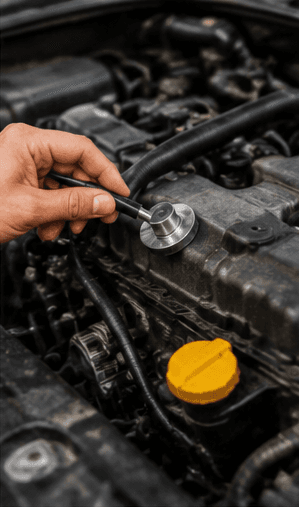
A knocking noise from a car does not identify one faulty part. A deep knock from the engine that follows engine speed is very different from a clunk over bumps, a click on full steering lock or a thud when drive is taken up. Reduce load and work out when the sound occurs. Stop the engine for low oil pressure, severe metallic knocking, overheating or sudden loss of power; stop driving for unstable steering, poor braking or a suspected loose wheel.
Describe the sound before trying to name it
Note whether the vehicle is stationary or moving, whether the rhythm follows engine speed or road speed, and whether acceleration, braking, turning or bumps trigger it. A recording from inside the cabin can help, but do not hold a phone while driving. Ask a passenger to record only when it is safe.
Words such as knock, tap, clunk and rattle are subjective. The conditions are more valuable: “one clunk when changing from reverse to drive” or “rapid clicking on full left lock” gives a technician a repeatable test. Also mention temperature, recent repairs and whether any warning appeared.
Knocking that follows engine speed
A tapping from the top of an engine can involve valve-train components, oil supply or an injector, while a deeper lower-engine knock can be more serious. Combustion knock under load may relate to fuel quality, excessive temperature, mixture or control problems. None of these can be confirmed by sound alone because pumps, pulleys, belt tensioners and accessories can transmit noise through the engine.
Check the oil level with the car parked as the handbook directs. If the oil-pressure warning is on, the level is very low, or the knock is heavy and new, switch off and arrange recovery. Adding oil does not prove that pressure is adequate and should not be used to justify continued driving when the warning remains.
A knock over bumps
Clunks over rough surfaces commonly involve worn bushes, ball joints, anti-roll-bar links, dampers, springs or mountings. Loose undertrays, exhaust shields and items in the boot can imitate suspension noise. The sound may change when only one wheel crosses a bump or when the brakes are lightly applied.
Because suspension supports and guides the wheel, new noise combined with wandering, uneven ride height or steering play needs urgent assessment. Our clunking noise over bumps guide explains the likely inspection path without assuming every knock needs the same part.
Knocks while turning
A repeated click or knock on full lock is often associated with an outer CV joint, particularly if a boot has split and lost grease. A single clunk can instead come from a top mount, ball joint, steering joint, loose fixing or driveline movement. Avoid holding the steering against full lock longer than needed.
If the steering catches, becomes heavy or the wheel position feels unstable, do not continue. A visual boot inspection may reveal grease, but the vehicle needs safe support and correct joint-loading checks. Read more about clicking noises when turning.
A clunk when accelerating or changing gear
Excess movement in engine or gearbox mounts can create a thud as torque changes direction. Driveshaft joints, differential mountings, prop-shaft components and transmission play are other possibilities. Some movement is designed into a driveline, so a part should not be replaced solely because it moves during a casual inspection.
A technician can reproduce the transition carefully, observe mount movement and inspect joints for play or binding. If the engine speed rises without matching acceleration, or gear engagement is harsh, describe that separately because it may indicate a clutch or transmission problem.
Exhaust and body noises
An exhaust that contacts the body can knock when the engine rocks or the car crosses a bump. Broken hangers, loose shields and internal catalyst or silencer damage can rattle. Exhaust leaks may also produce a chuffing or tapping sound that speeds up with the engine.
Do not inspect a hot exhaust or run the engine in an enclosed space. Fumes entering the cabin, a hanging section or a sudden loud leak needs prompt attention. Headache or dizziness inside the car is a reason to stop, get into fresh air and avoid using the vehicle.
Is the knocking safe to drive with?
Stop for a heavy engine knock, oil-pressure warning, smoke, overheating, serious power loss, wheel looseness, steering instability or reduced braking. A light trim or shield rattle may be less urgent, but it should still be confirmed because safety-critical noises can sound mild from inside. If the cause is unknown, avoid speed and load until it is inspected.
Do not repeatedly rev the engine or drive over the same pothole to make the noise louder. Reproduction should use the minimum stress required, ideally by a technician who can observe data and components safely.
What a professional diagnosis involves
The process begins with the timing and location clues, followed by fluid and warning checks. The vehicle may be inspected on a lift, suspension joints loaded correctly, driveline free play assessed and engine data reviewed. An electronic listening tool or chassis microphones can help locate a noise that travels through the structure.
SOB Autofix can investigate the symptom and arrange appropriate repairs and maintenance. A clear finding should distinguish the sound source from the cause, explain the safety implications and identify any related wear before work is authorised.
After a noisy component is repaired
The original conditions should be repeated during verification. If several worn components were found, ask which one was proven to create the complaint and which were advisory observations. This keeps the repair decision evidence-based and makes it easier to recognise any separate noise later.
Frequently asked questions
Does engine knocking always mean major damage?
No. Accessories, injectors and exhaust leaks can sound similar, but a new deep knock or oil-pressure warning is urgent. Switch off and have it assessed rather than testing it by revving.
Why does my car knock only over small bumps?
Anti-roll-bar links, bushes, mounts and loose shields are possibilities because short wheel movements load them differently. Correctly loaded inspection is needed to confirm the source.
Can low oil cause a knocking sound?
Low level can reduce oil supply and contribute to serious noise, but topping up does not resolve a pressure loss or existing damage. Stop if the oil-pressure warning appears.
Why is there one clunk when I set off?
Mount movement, driveline joints, brake movement or suspension play can create a single torque-change clunk. The direction and load should be reproduced safely during inspection.
Related guides and services
Need a knock traced accurately?
Tell us when the noise occurs and SOB Autofix can plan a focused mechanical or diagnostic inspection.
Get a repair quoteKeep reading
Related articles
Car Pulling to One Side While Driving or Braking: What Causes It?
Squeaking or Grinding Brakes: When Do Your Brake Pads Need Replacing?