Repairs & Maintenance
Car Making a Clicking Noise When Turning: Is It the CV Joint?
Repeated clicking on full lock often points to an outer CV joint, but steering, suspension and brake parts can make similar sounds.
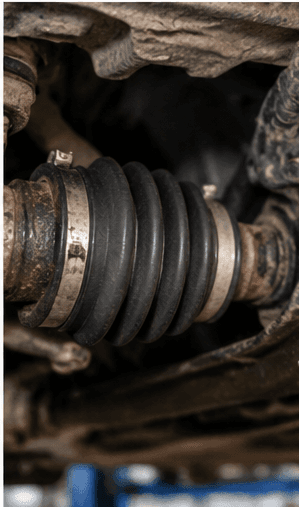
A repetitive clicking noise while accelerating on full steering lock is commonly associated with a worn outer CV joint, especially if its rubber boot has split and thrown grease around the wheel area. It is not proof. Wheel bearings, brake hardware, steering joints, suspension mounts, tyre contact and loose fixings can create similar sounds. If steering feels unstable, a wheel appears loose, the noise becomes a heavy knock or drive is interrupted, stop and arrange recovery.
What a CV joint does
Constant-velocity joints allow a driveshaft to transmit power while suspension and steering angles change. Front-wheel-drive cars usually have an inner and outer joint on each front shaft; other drivetrains use different arrangements. The outer joint operates through a large angle when turning, which is why wear there often becomes loud on full lock.
Each joint is protected by a flexible boot filled with grease. A split boot lets lubricant escape and water or grit enter. Finding a damaged boot early may protect a joint that has not yet developed wear, but once clicking is established, a boot alone may not solve it.
Typical outer CV-joint symptoms
The classic pattern is a rapid, regular click from one front corner during low-speed acceleration on a tight turn. It may be louder turning one direction, although sound travels and the loaded side is not always obvious from the cabin. The rhythm normally follows wheel speed rather than engine speed.
Noise when coasting straight ahead is less typical. A technician should reproduce both left and right turns carefully, inspect boots and check the shaft and hub area. Do not perform repeated full-throttle circles; that adds load and can worsen a failing joint.
Inner CV joints feel different
Inner joints work through smaller steering angles but accommodate driveshaft length changes. Wear can cause shudder or vibration under acceleration, clunks as drive is taken up, or movement felt through the floor. Engine mounts, gearbox mounts, wheel problems and other driveline joints can produce the same pattern.
If the main symptom is vibration at speed rather than clicking on turns, start with the car shaking and vibrating guide. Load-related diagnosis should compare acceleration, steady throttle and coasting rather than assuming the complete shaft needs replacement.
Other causes of clicking while turning
A strut top bearing or spring can wind up and release with a click or ping. Ball joints and track-rod ends may knock as load changes. Brake pads or shields can move, and a stone may touch a rotating disc. Tyre tread can contact a liner when steering if the liner is loose or the wheel and tyre size is unsuitable.
A single click as the steering changes direction is different from a rhythmic wheel-speed click. Steering-column joints and electric steering mechanisms add further possibilities. Record whether the car must be moving and whether applying the brakes changes the sound.
Safe checks you can make
With the car parked, engine off and wheels accessible without crawling underneath, look for a split concertina-style boot or grease thrown onto the inner wheel, suspension or arch liner. Check for a loose liner and visible tyre rub marks. Do not touch hot brake parts or rotate a driven wheel while the vehicle rests on a jack.
Note whether the clicking is louder on left or right lock, only under power, and whether it follows road speed. A short recording by a passenger can help. Avoid adding grease through a damaged boot as an improvised fix; contamination and wear still need assessment.
Is it safe to drive with a clicking CV joint?
An early, light click may allow a gentle journey for inspection, but joint wear can progress and ultimately interrupt drive or damage surrounding parts. Avoid full-lock acceleration, high loads and long trips. Arrange repair promptly rather than waiting for the sound to become constant.
Stop if clicking changes into heavy knocking, the car vibrates severely, steering or wheel position feels abnormal, or drive is lost. These symptoms may indicate advanced joint wear or another safety-critical fault. Recovery is preferable when the condition is uncertain.
How the fault is confirmed
The vehicle is road-tested only if safe, then raised using proper equipment. The technician inspects boots, grease loss, joint play, shaft condition, hub fixings, steering and suspension. The joint may need to be articulated and loaded because free play alone does not always correlate with noise.
Diagnosis should also find why a boot failed. Age, accidental damage, incorrect installation or contact with another component may matter. On some vehicles the outer joint is available separately; on others a complete shaft is the practical repair. Part quality and correct axle-nut procedures are important.
After a driveshaft repair
The hub fixing should be tightened using the specified method, any lost gearbox oil checked, and disturbed brake or suspension items refitted correctly. A road test on both steering locks verifies that the click is gone and no vibration has been introduced. Wheel alignment is considered if geometry-related components were disturbed, not automatically for every shaft change.
SOB Autofix can identify clicking and driveline faults through its repairs and maintenance service. Share the steering direction, throttle condition and whether grease is visible when requesting an assessment.
Frequently asked questions
Which CV joint clicks when turning?
The outer joint is commonly responsible for repetitive clicking on a powered tight turn. Sound can travel, so inspection should confirm the side rather than relying only on the driver's impression.
Can I replace only the CV boot?
Possibly if damage is found before contamination and wear occur. A joint that already clicks usually needs closer assessment and may require joint or shaft replacement.
How quickly can a clicking CV joint fail?
There is no reliable distance. Load, contamination and wear differ, so prompt repair and avoiding full-lock acceleration are safer than trying to predict remaining life.
Can a wheel bearing click on turns?
Bearings more often hum or rumble, but damage and hub-area faults can make varied noises. Bearing, brake, suspension and driveline checks should be performed together.
Related guides and services
Get a turning click inspected
A road test and driveline inspection can confirm whether the CV joint, steering, suspension or brake hardware is responsible.
Request a repair quoteKeep reading
Related articles
Car Pulling to One Side While Driving or Braking: What Causes It?
Squeaking or Grinding Brakes: When Do Your Brake Pads Need Replacing?