Diagnostics
Coolant Keeps Disappearing but There’s No Visible Leak: What Could Cause It?
Coolant can escape only when hot, evaporate on engine parts, enter the cabin or be consumed internally without leaving a puddle.
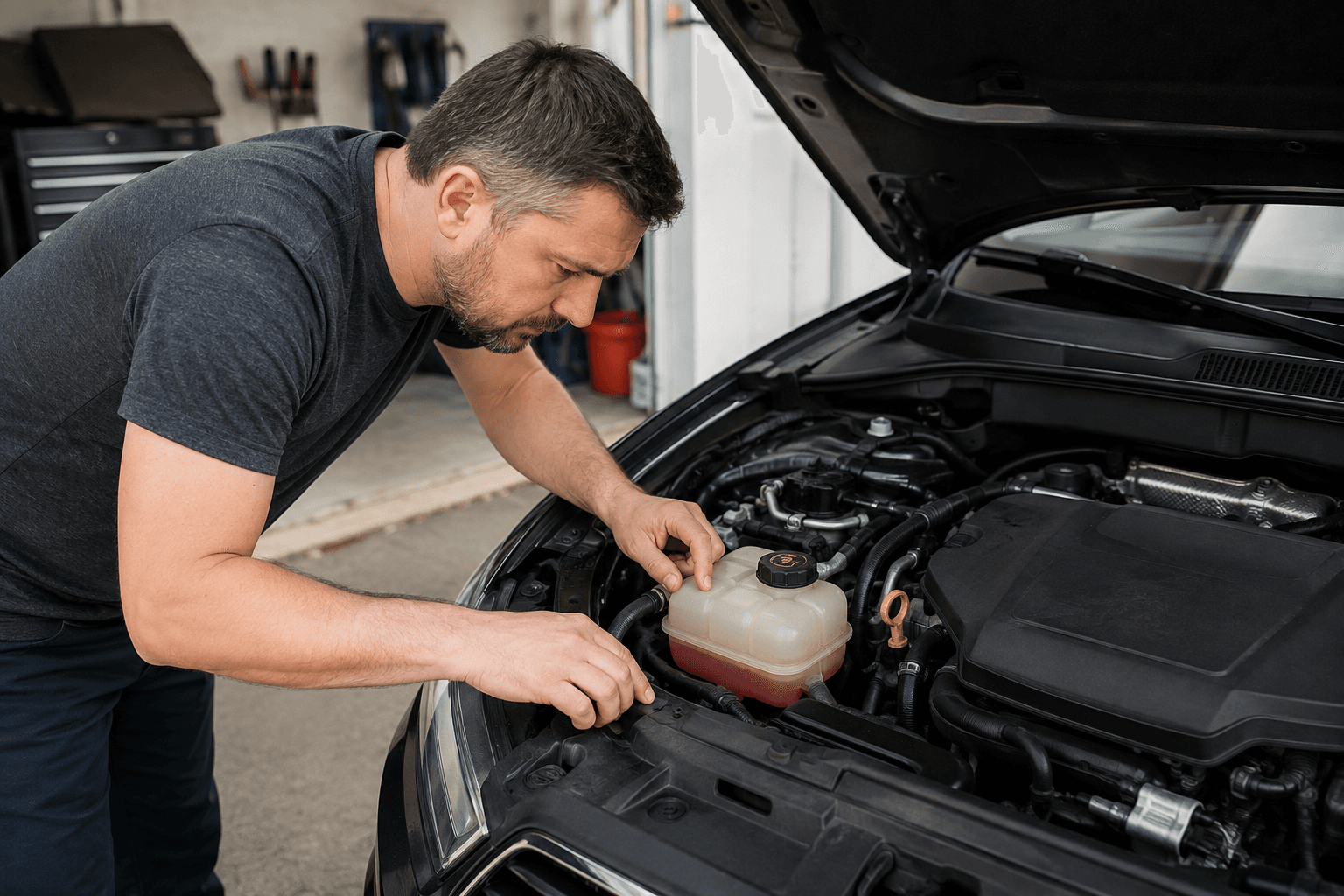
Coolant that keeps disappearing without a puddle may be leaking only when the system is hot and pressurised, evaporating on a hot surface, escaping through the cap, entering the cabin through the heater matrix or passing internally into a cylinder or the oil. A falling level is not normal consumption. Check it only when cold, record how quickly it drops and arrange testing before the engine overheats.
Why a leak may leave no mark
A pinhole can spray a fine mist only at operating pressure. Coolant landing on an exhaust or engine surface may evaporate and leave a pale or coloured crust rather than a pool. Undertrays can catch fluid and release it elsewhere. Pump seals may also leak intermittently or only while the shaft is turning.
A cold pressure test can reproduce leakage with the engine off, while UV dye may trace small external losses. The test pressure must remain within the vehicle specification; excessive pressure can create damage rather than diagnose it.
Expansion-tank cap and overflow loss
The cap maintains a designed pressure and allows controlled expansion. A weak seal can release vapour or coolant too early. Conversely, abnormal combustion pressure or overheating can force coolant out even when the cap is functional. Replacing the cap is inexpensive but should not be used to dismiss signs of overpressure.
Look for dried residue around the tank and overflow path when cold. Cracks in plastic tanks and seams may open with heat. Never inspect closely or loosen the cap while hot.
Heater-matrix leaks
The cabin heater uses engine coolant. A sweet smell inside, persistent windscreen mist, damp carpet or reduced coolant can indicate a heater-matrix or connection leak. Coolant vapour can irritate, and a significant leak may worsen rapidly.
Air-conditioning condensation is normally clear water beneath the car and does not lower the coolant level. Fluid colour and location help, but modern coolant colours vary, so do not identify it by colour alone.
Internal coolant loss
Coolant can enter a combustion chamber through a sealing failure, cracked component or other internal fault. Persistent dense white vapour after the exhaust is fully warm, misfiring on start-up, unusually hard cooling hoses, repeated bubbling or pressure building rapidly from cold are relevant clues. None proves a head-gasket fault by itself.
Water vapour from a cold exhaust is normal, particularly in cool weather. Tests may include cooling-system pressure behaviour, combustion-gas detection, spark-plug or cylinder inspection, compression and leak-down testing. The exhaust smoke guide helps distinguish persistent smoke from condensation.
Coolant entering oil can sometimes create a pale emulsion, but small deposits under an oil cap may also result from condensation on short journeys. Check the dipstick and overall oil condition, and rely on testing rather than one visual sign. Do not run the engine if oil level has risen unexpectedly or contamination is substantial.
Can you keep topping it up?
No. Repeated topping up masks the rate of loss, risks the wrong mixture and allows sudden overheating. Air drawn into the system can create hot spots and unreliable heater operation. If the level drops below minimum again, or a warning appears, the car should not be relied upon.
Use only the specified coolant when instructed and never mix products based on colour. Emergency water may reduce freeze and corrosion protection and must be corrected after repair. Stop-leak additives can block narrow passages and interfere with later diagnosis.
What to record
Marking the cold level externally or taking a photograph can show the rate without opening the system hot. Note mileage, cabin smells, visible residue, exhaust behaviour, heater changes and whether loss follows long journeys. Check for oil or coolant warnings and rising temperature.
If temperature rises, follow the car overheating guide: stop safely, switch off and do not open the cap. A cooling system low enough to overheat needs recovery rather than another top-up and journey.
How the leak is found
The technician inspects the cold system, tests cap and system pressure, checks hidden areas and may use dye. Temperature data and fan operation are reviewed because overheating itself can expel coolant. If no external path is found, evidence-led internal-engine tests follow.
SOB Autofix provides engine diagnostics and repair in Doncaster. A sound repair includes the source, correct coolant specification, proper bleeding and a repeat pressure and temperature check—not simply refilling the tank.
Frequently asked questions
Can coolant evaporate without a leak?
The sealed system should not require routine top-ups. Fluid may evaporate after escaping from a tiny hot leak, but there is still a fault to locate.
Does white exhaust smoke prove a head-gasket failure?
No. Cold condensation is normal and several faults can create persistent vapour. Cooling pressure, gas and mechanical tests are needed.
Why can I smell coolant inside the car?
A heater-matrix or cabin connection leak is possible, especially with misting or damp carpet. Arrange prompt cooling-system inspection.
Can I use stop-leak additive?
It is not a dependable diagnosis or repair and may restrict small cooling passages. Finding and repairing the source is safer.
Related guides and services
Coolant level dropping again?
Pressure, temperature and internal-engine tests can locate loss that never reaches the ground.
Request cooling-system diagnosticsKeep reading
Related articles
Car Electrical Problems: 10 Signs You Should Get Your Vehicle Diagnosed