Car Care
Car Overheating: Common Causes and What You Should Do
An overheating engine can be damaged within minutes. Stop safely, switch off and let it cool; never open a hot cooling system.
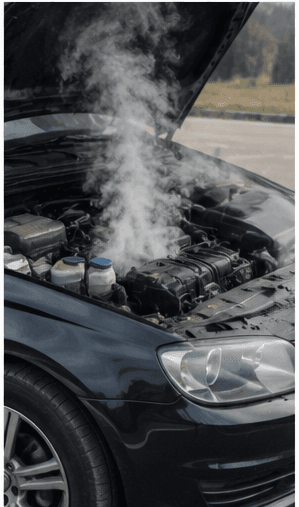
If your car is overheating, reduce load, turn off the air conditioning and pull over safely as soon as possible. Switch the engine off if the gauge enters the hot zone, a red temperature warning appears, steam is visible or power drops. Do not open the coolant cap while the system is hot: pressurised coolant can cause severe burns. Continuing to drive can distort cylinder-head components, damage seals and turn a leak or fan fault into major engine damage.
Warning signs of overheating
The temperature gauge rising above its normal stable position, a red thermometer symbol, steam, a sweet smell, coolant beneath the car or a heater suddenly blowing cold can all indicate trouble. Some modern gauges remain centred across a broad temperature range, so a warning message deserves immediate attention even if the needle has only just moved.
Loss of cabin heat while temperature rises can mean coolant is no longer circulating through the heater. Stop rather than treating the heater as a way to continue. A boiling expansion tank or visibly escaping steam must be left untouched until completely cool.
Common causes
- Low coolant caused by an external or internal leak.
- A thermostat that does not open correctly.
- Cooling-fan, relay, wiring or control faults, often noticed in traffic.
- A water-pump or drive-belt problem that reduces circulation.
- A restricted radiator or air trapped after cooling-system work.
- Combustion gases entering the cooling system through engine damage.
These possibilities overlap. Overheating at motorway speed suggests a different load and airflow pattern from overheating only while idling. A technician should pressure-test, inspect circulation and fan control, and check temperature data rather than replace the thermostat by assumption.
What to do at the roadside
Signal early and stop somewhere away from traffic. Switch off, move occupants to a safe location and call for assistance if steam, coolant loss or a red warning is present. On a fast road, personal safety takes priority over inspecting the car.
Wait until the engine is fully cool before any level check. This can take a considerable time. Never pour cold water over a hot engine and never remove a pressurised cap with a cloth as a supposed precaution. If coolant has been lost, topping up does not make the system dependable; the leak and correct coolant mixture still need attention.
Can you drive after it cools down?
Cooling down does not repair the cause. If coolant is missing, a belt is damaged, the warning returns, steam appears or the reason is unknown, arrange recovery. A very short movement to escape immediate danger may be necessary, but planning a journey risks another rapid temperature rise.
Repeated overheating is especially harmful. Each event can worsen gasket sealing, warp surfaces and contaminate oil. If the engine runs roughly, emits persistent white smoke or the oil appears contaminated, leave it off.
Coolant leaks and pressure
Hoses, radiator seams, the expansion tank, cap, thermostat housing, pump and cabin heater circuit can leak. Some leaks occur only hot and pressurised, then evaporate without leaving a puddle. UV dye or a cold pressure test can reveal them. The cap is part of system pressure control and should be tested rather than dismissed.
Our guide to coolant disappearing without a visible leak explains internal loss and hard-to-see external leaks. Never use stop-leak products as a default; they can restrict small passages and complicate proper repair.
Fan faults and traffic overheating
At road speed, air flows through the radiator naturally. In slow traffic the electric fan becomes more important, so a fan-control fault may first appear when stationary. Causes include the motor, fuse, relay, resistor or module, temperature input and air-conditioning pressure strategy.
Do not place hands near a fan even with the engine off; electric fans can start unexpectedly. Electrical tests should verify power, earth and command before the motor or module is replaced.
How the cause is diagnosed
Diagnosis begins only when the system is safe and cool. Coolant level and condition, visible leakage, belt drive and fault codes are checked. Pressure testing, fan actuation, temperature comparison and circulation checks follow. Combustion-gas testing or mechanical tests may be needed if pressure builds abnormally or coolant loss has no external source.
SOB Autofix offers engine repairs and vehicle diagnostics in Doncaster. The repair should be followed by correct filling and bleeding, verification of fan operation and a controlled temperature test.
Preventing another event
Check coolant only when cold and investigate repeated top-ups. Use the exact coolant specification and mixture for the vehicle; colour alone does not prove compatibility. Attend to belt noise, leaks and warning messages promptly, and never assume a gauge that returned to normal has made the cause disappear.
Frequently asked questions
Can I add water to an overheating car?
Only after the system is completely cool and only as an emergency measure permitted by the handbook. A leak still needs repair and the correct coolant mixture restored.
Why does my car overheat only in traffic?
Reduced natural airflow makes fan operation important, so fan motor, relay, wiring or control faults become more likely. Coolant circulation problems remain possible.
How long should I wait before opening the coolant cap?
There is no fixed safe time. Wait until the engine and hoses are fully cool; if uncertain, leave the cap closed and seek assistance.
Can overheating damage the engine immediately?
Yes. Severe temperature can cause damage within minutes. A red warning, steam or gauge in the hot zone requires a safe stop and shutdown.
Related guides and services
Has the temperature warning appeared?
Arrange cooling-system testing before another overheat risks more extensive engine damage.
Get the cooling system checkedKeep reading
Related articles
Car Electrical Problems: 10 Signs You Should Get Your Vehicle Diagnosed