Diagnostics
White, Blue or Black Smoke From Your Exhaust: What Each Colour Means
Persistent white, blue or black exhaust smoke points towards different coolant, oil, fuel or airflow problems and should not be diagnosed by colour alone.
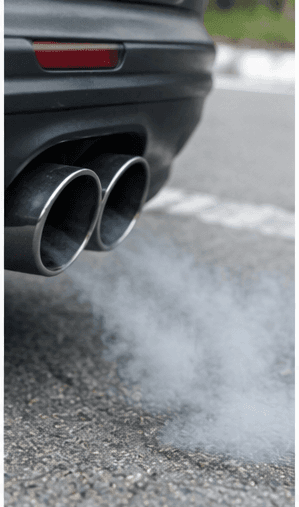
Exhaust smoke colour is a clue, not a diagnosis. Persistent thick white smoke can indicate coolant or unburnt fuel, blue-grey smoke usually suggests oil is entering combustion, and black smoke indicates excessive fuel or insufficient air. Brief white vapour from a cold exhaust is normal condensation. Stop driving for dense smoke, rapid oil or coolant loss, overheating, severe misfiring, a runaway diesel engine or an oil-pressure warning.
White smoke or normal condensation?
Water is a normal combustion product, so a cold exhaust often emits thin vapour that disappears as the system warms. Condensation may drip as clear water. Concern rises when a dense plume continues at full temperature, has a sweet smell, accompanies coolant loss or makes the engine misfire.
Internal coolant entry is one possibility, but injector faults on a diesel can also create pale unburnt-fuel smoke. Cooling-system pressure, combustion-gas tests, cylinder inspection and engine data separate them. Read the guide to coolant loss without a visible leak if the expansion-tank level also falls.
Blue or blue-grey smoke
Blue smoke normally indicates engine oil being burnt. Worn valve-stem seals may show after idling or on start-up; turbocharger seal or drain problems can produce smoke under load; piston-ring or crankcase-ventilation faults can create more continuous consumption. Oil spilled during service can smoke briefly from an external hot surface rather than the tailpipe.
Check oil level correctly when safe. If it is very low, pressure warning is on or smoke is heavy, switch off. A diesel engine that begins accelerating uncontrollably while consuming its own oil is an emergency: do not stand in front of it or attempt risky intervention; move away and call emergency assistance if danger persists.
Black smoke
Black smoke means more fuel is present than available air can burn cleanly. A restricted air path, boost leak, airflow-sensor error, injector fault, exhaust recirculation issue or control problem may be involved. Older diesels can emit a brief puff under load, but sustained visible smoke on a modern car is not normal.
Continuing can contaminate oil, damage emissions components and load the diesel particulate filter. Do not respond by driving harder until the air, fuel and boost data are checked. If power has also dropped, see why cars lose power when accelerating.
Smoke only at certain times
Timing helps. Smoke after a cold start, after long idling, during acceleration or on overrun loads engine systems differently. A plume after a downhill coast may suggest oil entering under high intake vacuum on some petrol engines; smoke under turbo boost directs attention elsewhere. Fuel smell, sweet smell and oil consumption add context.
Record a short video from a safe stationary position or ask a passenger to observe. Do not follow the car closely or inhale exhaust fumes. Diagnosis in an enclosed building is dangerous without extraction.
Is it safe to keep driving?
Brief condensation with stable fluid levels and normal running is expected. Persistent coloured smoke needs prompt assessment. Stop for overheating, falling coolant, low oil, flashing engine light, loss of power, strong fuel smell or a smoke cloud that obscures other road users.
Even when performance feels normal, oil or excess fuel can damage the catalyst and particulate filter. Avoid long journeys and high load. A warning-free dashboard does not guarantee that mechanical oil consumption is safe.
What not to assume
Smoke colour changes with lighting and can be hard to judge. Steam can look blue against a dark background, while fine oil smoke may look grey. Do not order a turbocharger, injectors or head-gasket repair from colour alone. Several cheaper airflow, ventilation and wiring faults can imitate major failures.
Likewise, an exhaust additive cannot repair mechanical wear or a leaking cooling system. Fixing the cause before cleaning an emissions component prevents a quick repeat.
Diagnostic tests
An assessment checks fluid levels and condition, fault codes, fuel corrections, airflow and boost data, crankcase pressure and cooling-system behaviour. Compression or leak-down testing, turbo inspection and injector tests are selected only when evidence points there. Exhaust after-treatment pressure and temperatures may also be relevant.
SOB Autofix offers vehicle diagnostics, DPF diagnostics and engine repairs in Doncaster. The final recommendation should connect the smoke pattern to measurements and verify that fluid consumption and emissions have returned to normal.
Frequently asked questions
Is white smoke on a cold morning normal?
Thin vapour that clears as the exhaust warms is usually condensation. Persistent dense smoke with coolant loss, misfiring or a sweet smell needs testing.
Can too much engine oil cause blue smoke?
Yes. Overfilling can affect crankcase ventilation and oil control. Verify the level correctly and do not run substantially over the maximum mark.
Does black smoke mean the injectors are faulty?
Not necessarily. Restricted air, boost leaks, sensors and control faults can create the same rich condition. Air and fuel measurements should guide testing.
Can I drive if the exhaust smokes only under acceleration?
Avoid hard load and arrange diagnosis. Turbo, fuelling, airflow or oil-control faults may worsen and damage emissions components.
Related guides and services
Persistent exhaust smoke?
Record when it appears and arrange fluid, engine-data and mechanical checks before further damage develops.
Book vehicle diagnosticsKeep reading
Related articles
Car Electrical Problems: 10 Signs You Should Get Your Vehicle Diagnosed