Diagnostics
Car Electrical Problems: 10 Signs You Should Get Your Vehicle Diagnosed
Intermittent starting, flickering lights, burning smells and multiple warnings can all point to supply, wiring or module faults.
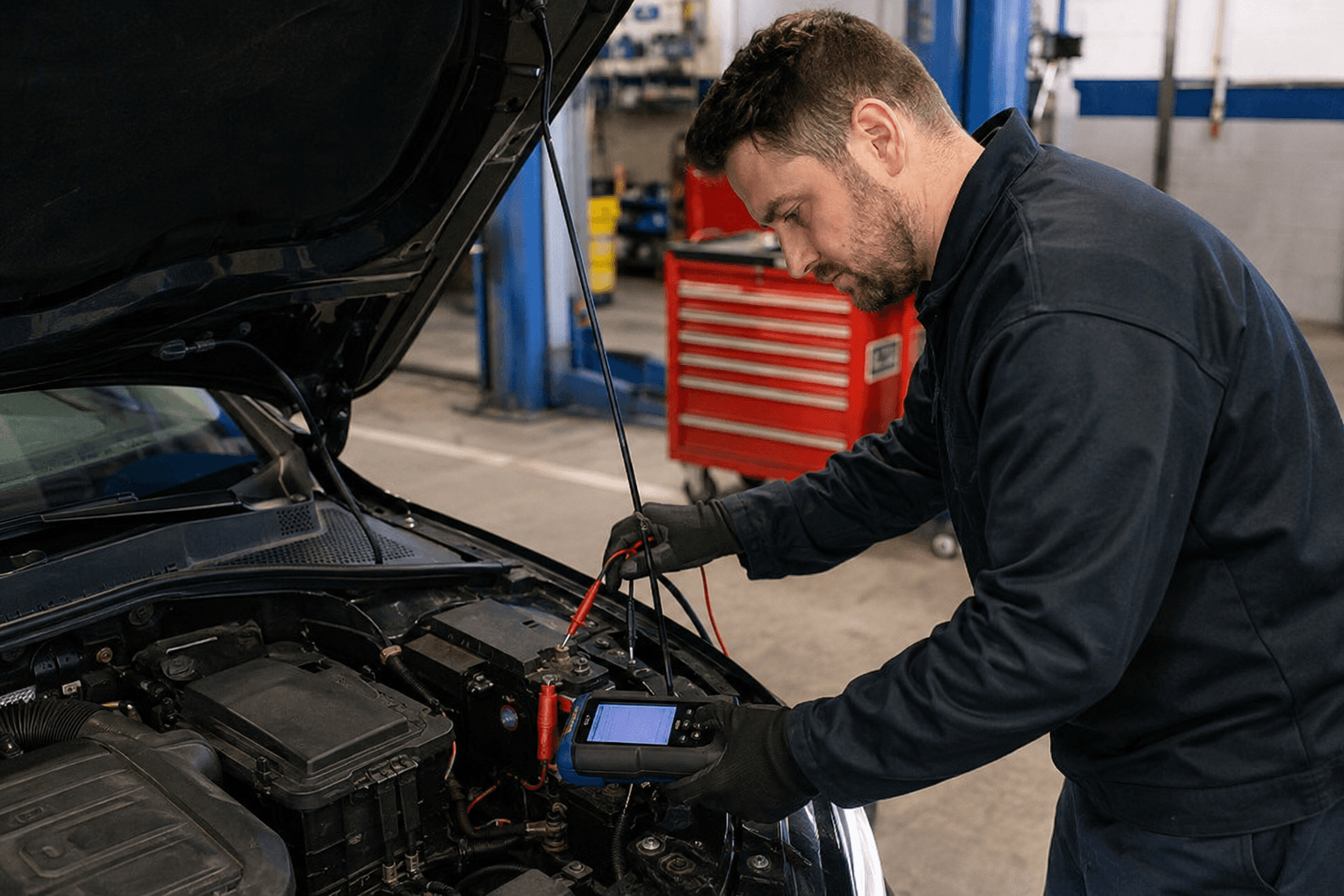
Car electrical problems often appear as intermittent starting, flickering lamps, repeated flat batteries, blown fuses, erratic accessories or several warning lights at once. The cause can be as simple as a poor earth or as involved as damaged wiring or module communication. Because low voltage can make healthy systems behave strangely, diagnosis should begin with power, earth and charging checks before expensive control units are blamed.
1. Starting is intermittent
If turning the key sometimes produces silence, a click or electrical resets, the starting circuit needs testing. Battery condition, terminals, engine earths, relays, selector or clutch switches and the starter command are all possible. The guide to a car that will not start while lights work helps distinguish the sounds.
Repeated attempts can flatten the battery and obscure the original problem. Record whether temperature, key position or gear selection changes it.
2. The battery repeatedly goes flat
A parked drain, weak battery or inadequate charging can all leave the car dead. Aftermarket cameras, trackers and audio equipment are worth mentioning, but factory modules and wiring can also remain awake. Proper testing waits for the vehicle to sleep and measures current without waking it.
Read the overnight battery-drain guide before buying another battery.
3. Lights flicker or change with engine speed
Headlamps that pulse, dim heavily or brighten unusually can indicate unstable charging, poor connections or earth faults. Some controlled lighting behaviour is normal, so compare it with previous operation and other symptoms. A burning smell or very bright lamps can suggest overvoltage and calls for prompt shutdown.
4. Several warnings appear together
Multiple dashboard faults can share one cause. Falling voltage or interrupted network communication may cause ABS, steering, engine and gearbox modules to report errors at once. Scanning all systems and checking the timestamp and voltage context is more useful than repairing each message separately.
5. Fuses keep blowing
A fuse protects wiring against excessive current. Replacing it with a higher rating removes that protection and can cause fire. A repeated failure suggests a short circuit, overloaded component or damaged wiring. Fit only the specified rating, and arrange fault tracing if it fails again.
6. Accessories work intermittently
Windows, locks, wipers, blowers or mirrors that stop and restart may have switch, motor, module, connector or broken-wire faults. Problems that follow door movement often involve wiring through a hinge area. Water ingress can corrode connectors and create several changing symptoms.
Do not force a stalled motor repeatedly. Excess current can overheat wiring or damage control electronics.
7. There is a burning smell or hot connector
Hot plastic, smoke, crackling or visible melting is urgent. Switch off the affected equipment and the vehicle when safe, move occupants away and do not refit a fuse. A high-resistance connection can generate heat without drawing enough current to blow the fuse.
If smoke continues or fire is present, contact emergency services and do not open areas that feed the fire with air unnecessarily.
8. The battery warning light comes on
The red symbol usually reports charging performance rather than battery age. The alternator, belt, high-current cables and control circuit need checking. The vehicle may stop once stored energy is consumed, so follow the battery warning-light advice and reach safety.
9. Electronics behave differently after rain
Weather-related faults raise suspicion of water ingress, insulation damage and corroded terminals. Sunroofs, windscreens, drains and previous body repairs can create paths, but the source is not always directly above the wet connector. Drying the visible area without repairing ingress invites a repeat.
10. Diagnostic equipment cannot communicate
A scan tool that cannot reach one module may face a power, earth, network wiring or module fault. Inability to communicate is not proof that the module is dead. The connector supply and data network should be tested, and unrelated aftermarket wiring considered.
Why electrical faults can be difficult
Wires can break inside insulation, terminals can lose tension and faults can disappear when a harness is moved. Modules share supplies and communicate, so one poor earth can create symptoms in several locations. Parts swapping is expensive and can add programming or configuration problems.
An electrical diagram, measured voltage under load, voltage-drop tests, current measurement and network analysis turn an intermittent symptom into evidence. Fault codes guide the work but do not replace circuit testing.
What information helps diagnosis
Record the exact time and conditions, which equipment was operating, whether the car was wet or hot, and any recent battery or accessory work. Photograph warnings and avoid clearing codes. Bring all keys if the problem involves starting or locking.
Do not probe modern connectors with unsuitable tools; spread terminals and accidental shorts can create new faults. Never replace a fuse with foil, wire or a higher rating.
When the car should not be driven
Stop for smoke, burning insulation, a hot cable, loss of lighting at night, heavy steering caused by low voltage or a charging warning with worsening symptoms. Recovery is safer when essential controls are affected. An intermittent window or audio issue may allow normal travel, but should still be booked before it develops.
SOB Autofix provides electrical fault finding and ECU diagnostics in Doncaster. A useful diagnosis identifies the failed circuit and verifies the repair under the conditions that caused it.
Frequently asked questions
Can a bad earth cause multiple electrical faults?
Yes. Shared earth resistance can change voltages across several modules and create apparently unrelated symptoms. Voltage-drop testing under load can prove it.
Why does an electrical fault disappear at the garage?
Temperature, vibration, moisture and module sleep states can make faults intermittent. Detailed timing, recordings and monitored measurements help reproduce them.
Is it safe to fit a larger fuse?
No. The specified fuse protects the wiring. A higher rating can allow dangerous overheating and fire instead of solving the excessive-current fault.
Does a communication code mean the control unit is faulty?
Not by itself. Lost power, earth, network wiring, low voltage and another module disrupting the network can all prevent communication.
Related guides and services
Electrical fault becoming unpredictable?
Book systematic circuit and module testing before an intermittent problem strands the vehicle or damages wiring.
Book electrical diagnosticsKeep reading
Related articles