
Diagnostics
Battery Warning Light Came On While Driving: Can You Keep Driving?
The red battery light usually means the charging system is failing, not simply that the battery is old. Minimise electrical load and stop safely.
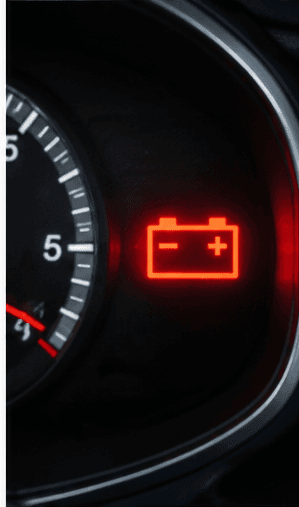
If the red battery warning light comes on while driving, the charging system is usually no longer maintaining the vehicle's electrical supply. The battery may be healthy yet is now powering the car alone, so the engine can eventually stop when its stored energy is exhausted. An alternator fault, broken or slipping drive belt, wiring problem, poor connection or control fault may be responsible. Switch off non-essential electrical loads, avoid restarting the engine unnecessarily and head only to the nearest safe place. Stop sooner if steering becomes heavy, temperature rises or other warnings appear.
What the battery symbol actually monitors
The symbol is commonly called the battery light, but it indicates charging-system performance. With the ignition on and engine stopped it should normally illuminate as a bulb check, then go out after starting. If it stays on or returns while running, system voltage or alternator control is outside the expected range.
Modern alternators can be computer controlled, so voltage does not remain at one simple figure in every condition. Diagnosis needs the vehicle's strategy, battery state and electrical load to be considered. Replacing the battery solely because its symbol is lit misses the most common meaning of the warning.
Common causes
- An alternator internal fault or worn drive mechanism.
- A loose, damaged or broken auxiliary belt.
- A failed tensioner or pulley that prevents reliable belt drive.
- Corroded battery terminals, engine earths or alternator cables.
- A blown high-current fuse, wiring fault or communication problem.
- Battery monitoring or charging-control faults on smart systems.
Low voltage can make several unrelated warning lights appear as modules begin to shut down. That does not necessarily mean every system has failed. The charging fault should be stabilised before secondary codes are interpreted.
Can you keep driving?
There is no dependable remaining distance. A fully charged battery with light electrical demand may last longer than a weak battery at night with lamps, wipers, heaters and demisters operating. The engine can stop without much warning and may not restart. Electric steering assistance and other systems can also be affected as voltage falls.
Drive only as far as necessary to leave danger when the car otherwise behaves normally. Avoid a motorway journey or attempting to get home across town. If coolant temperature rises, the steering suddenly becomes heavy, the belt area makes noise, you smell burning or a red temperature warning appears, stop the engine immediately. On some engines the same belt drives the water pump, so belt failure can cause rapid overheating as well as loss of charging.
What to do immediately
Turn off heated screens, seat heaters, audio, chargers and climate loads while retaining whatever lamps and wipers safety requires. Do not switch the engine off until you have reached a safe stopping place because it may not restart. Park away from traffic and arrange assistance.
Do not open the bonnet beside fast-moving traffic. When safely parked with the engine off, you may look for an obviously missing belt if it is visible without reaching into the engine bay. Never place hands near a running belt or pulley. Do not disconnect a battery terminal while the engine is running; voltage spikes can damage electronics and the practice is not a valid alternator test.
Battery or alternator?
A weak battery commonly causes slow starting before the engine runs. A charging fault more often brings the warning on during a journey and leaves the battery progressively discharged. Either can affect the other: repeated undercharging damages a battery, while a failing battery can make the alternator work hard.
The battery-versus-alternator guide compares the patterns, but measurement is required. A technician checks battery condition, voltage under load, alternator output, current, ripple, belt drive and cable voltage drop. On smart systems, scan data and commanded charging state may also matter.
Why a jump start is not the whole answer
A jump may start a car whose battery has been depleted, but if the alternator is not charging it will stop again. Incorrect connections can damage modules, and a swollen, leaking, frozen or unusually hot battery must not be jumped. Use the specified points and procedure in the handbook if a jump is appropriate.
After an apparent recovery, the system still needs testing. If the battery has gone flat repeatedly, read about overnight battery drain; a parasitic load is investigated differently from a failure while driving.
How charging faults are diagnosed
A useful test begins with battery state because an almost-flat battery can distort charging measurements. The belt, tensioner, terminals and earths are inspected, then voltage and current are assessed under controlled loads. Voltage-drop tests find resistance in cables that look normal, while ripple can reveal alternator diode problems.
Fault codes alone cannot distinguish every alternator, control and wiring issue. SOB Autofix offers battery and charging diagnostics in Doncaster and can test the system before replacement is recommended. The final check should confirm stable starting and charging after repair.
Frequently asked questions
Does the battery light mean I need a new battery?
Not necessarily. It usually reports a charging-system problem. The alternator, belt, cables, controls and battery condition all need testing.
How far can I drive with the battery light on?
There is no safe guaranteed distance. Electrical demand and remaining battery charge vary, and the engine may stop. Reach the nearest safe place and arrange help.
Can a broken belt cause the battery light?
Yes. If the alternator is no longer driven, charging stops. Some belt layouts also affect coolant circulation, making an accompanying temperature rise especially urgent.
Why did several warning lights appear together?
Falling system voltage can disrupt multiple control modules. Stabilise and test the charging supply before treating every warning as a separate failure.
Related guides and services
Battery light on now?
Arrange charging-system tests before the stored battery energy runs out or low voltage creates further faults.
Book charging diagnosticsKeep reading
Related articles

Car Electrical Problems: 10 Signs You Should Get Your Vehicle Diagnosed