Diagnostics
Why Is My Car Losing Power When Accelerating?
Poor acceleration can come from restricted air or fuel flow, boost leaks, ignition faults, exhaust restriction or protective limp mode.

A car that loses power when accelerating may have an air, fuel, ignition, boost-control, exhaust or sensor fault. Petrol and diesel engines can feel similarly sluggish for very different reasons, and the conditions matter: loss only uphill suggests a load-related problem, hesitation at one engine speed can indicate control or ignition trouble, and a sudden limit with a warning light may be limp mode. Ease off and arrange diagnosis; stop if the engine misfires violently, overheats, produces heavy smoke or displays a red warning.
Describe the loss of power accurately
There is a difference between hesitation, reduced maximum power and the engine speed rising without matching road speed. Hesitation is a stumble or delay when the accelerator is pressed. Reduced power means the engine responds smoothly but weakly. If revs flare while the car does not accelerate, a slipping clutch or transmission issue may be involved rather than low engine output.
Note whether the fault occurs cold or hot, at low or high revs, under full load, after a gear change or only during a regeneration event. Record dashboard messages and smoke colour. These details help a technician reproduce the complaint and avoid guessing from a generic description such as “slow”.
Air intake and sensor problems
The engine must measure and control the air entering it. A split intake hose, blocked air path, contaminated mass-air-flow sensor or implausible pressure reading can lead to incorrect fuelling and reduced torque. On turbocharged cars, a hose or intercooler leak may open mainly under boost, sometimes producing a hiss or whoosh and oily mist around the leak.
Cleaning or replacing an airflow sensor without data can be misleading. Live readings should be compared with expected values under the conditions where power drops. Smoke or pressure testing can expose leaks that are invisible at idle. Wiring, power supply and earth integrity also need checking when a sensor signal is implausible.
Fuel delivery and combustion
Under acceleration the engine needs more fuel. A restricted filter, weak pump, pressure-regulation problem or injector fault may only become obvious as demand rises. Water or incorrect fuel can also cause poor running. Low pressure should be measured and traced; it does not automatically identify the pump because supply restrictions, leaks, control signals and regulators affect the same reading.
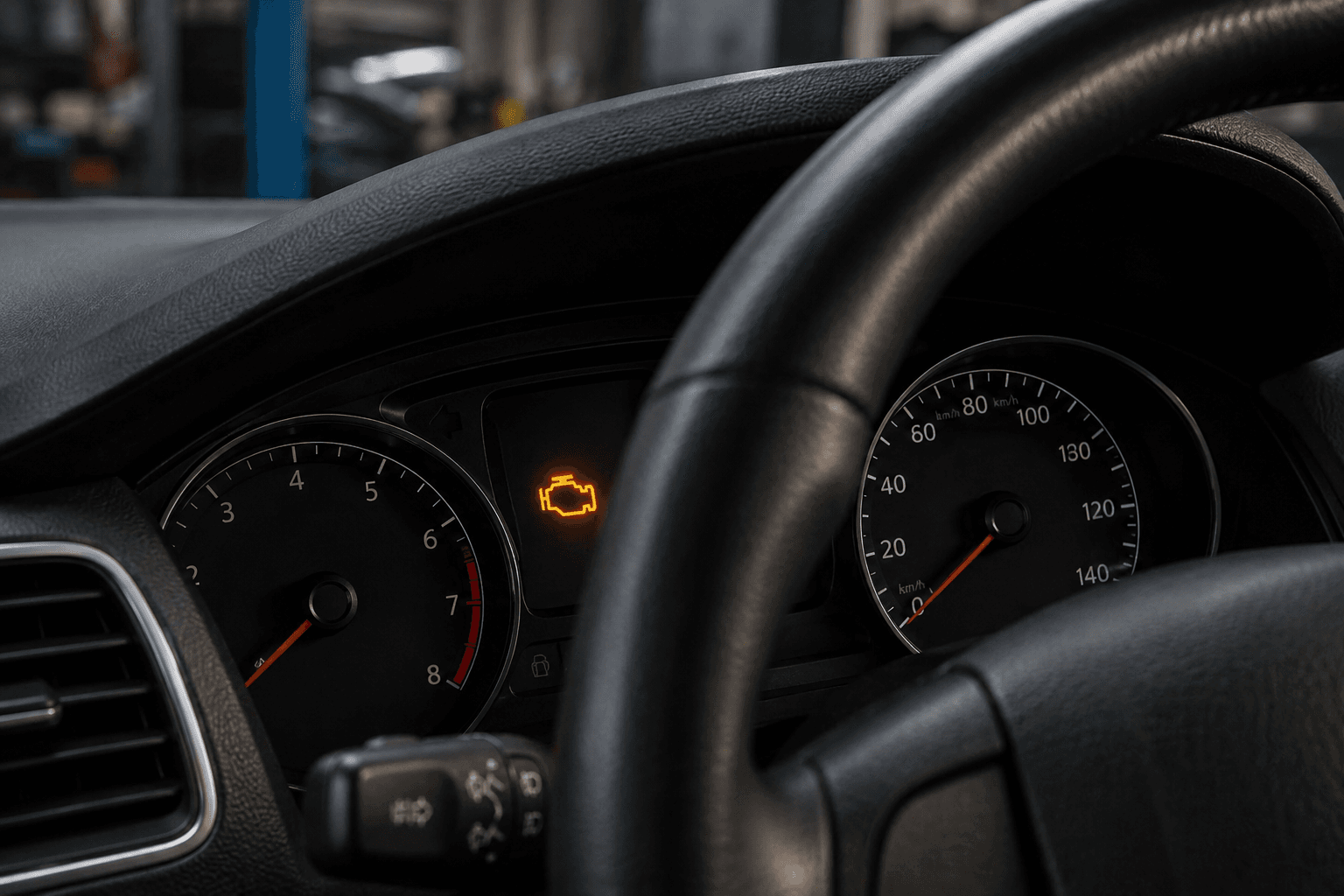
Petrol engines may hesitate when a spark plug or ignition coil breaks down under cylinder pressure. The car might feel acceptable at idle but misfire under load. Continuing with a severe misfire risks catalytic-converter damage. A flashing engine warning light is a reason to reduce load and stop safely.
Turbocharger and boost-control faults
Turbocharged engines rely on a sealed intake path and controlled exhaust energy. Split hoses, sticky actuator mechanisms, vacuum leaks, boost-control solenoids and sensor faults can all produce underboost or overboost. The control unit may then restrict power. A turbocharger should not be replaced merely because an underboost code is stored.
Diagnosis can involve commanded-versus-actual boost data, a smoke test, actuator operation, vacuum checks and inspection for abnormal shaft movement or oil leakage. Whistling alone is not conclusive, but a new siren-like noise, dense blue smoke or rapid oil loss requires the engine to be switched off and assessed.
Exhaust and emissions restrictions
A restricted exhaust prevents the engine from breathing out, which can reduce power increasingly as revs rise. On diesel vehicles, soot loading in the particulate filter may be the result of short journeys, but it can also be a consequence of another fault that increases soot or prevents regeneration. The DPF warning-light guide explains why forced regeneration is not always the first answer.
A damaged catalyst, exhaust-pressure sensor problem or collapsed internal component can create similar symptoms. Relevant pressure and temperature readings should be checked before expensive parts are authorised.
When the car has entered limp mode
Limp mode is a protective strategy, not a component. It may cap engine speed, disable turbo boost or restrict gear selection after the control system detects a value that could risk damage or unreliable operation. Restarting sometimes restores normal power temporarily, but it does not fix the recorded fault. Read why cars enter limp mode and arrange a scan before the evidence is lost.
Can you keep driving with poor acceleration?
Reduced acceleration can make joining a roundabout, overtaking or entering a motorway unsafe. If the vehicle cannot keep pace predictably, avoid driving it. Stop for heavy smoke, fuel smell, loud mechanical noise, overheating, a flashing engine light or low oil-pressure warning. If the loss is mild and the car is otherwise stable, drive gently only as far as needed for a safe assessment.
Do not repeatedly test full throttle to see whether the fault clears. High load can worsen a lean mixture, misfire, boost fault or overheating condition. It also obscures diagnosis if several new codes are created after the original event.
Useful checks at home
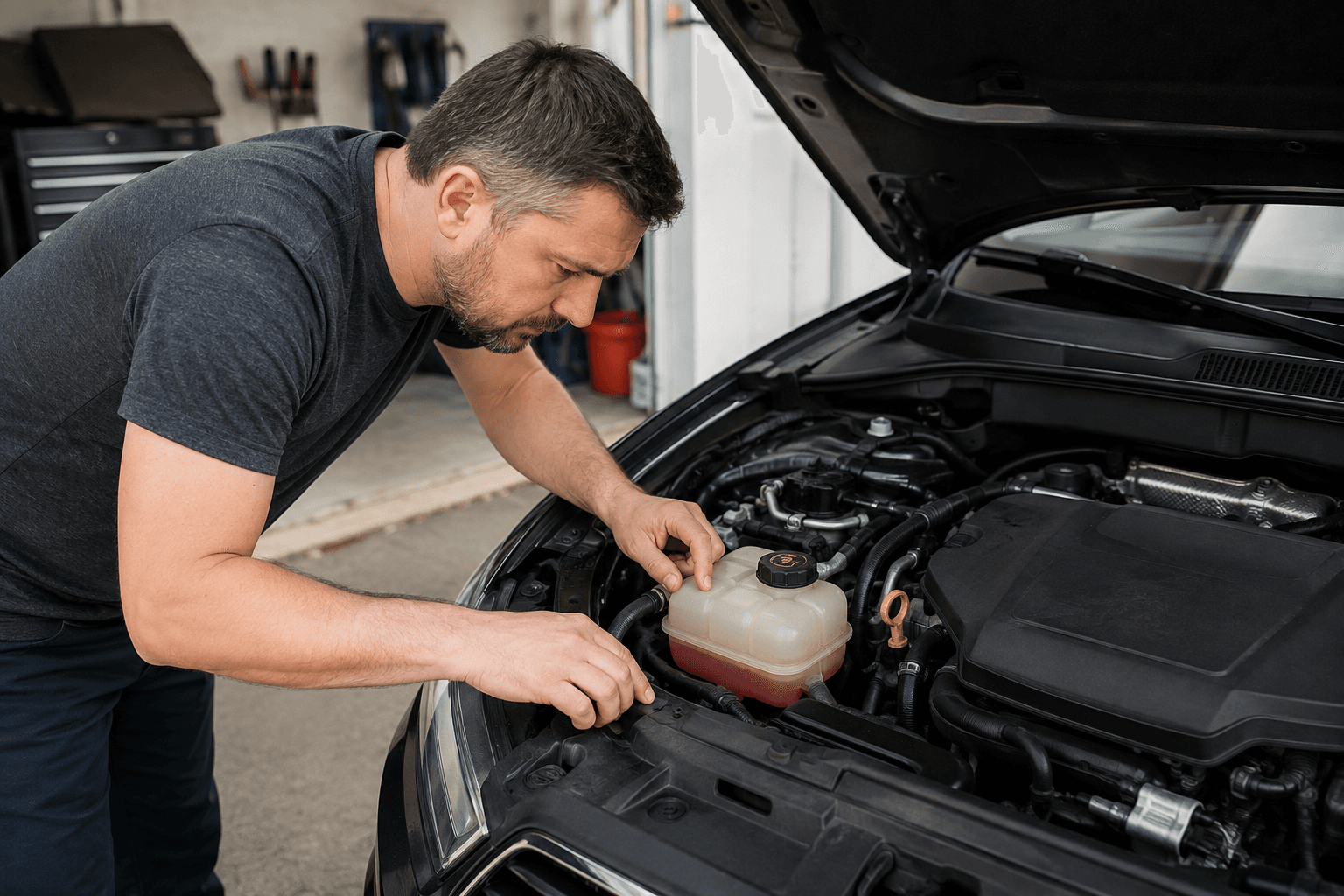
With the engine off and cold, check fluid levels, look for a visibly displaced intake hose and make sure no floor mat is obstructing pedal travel. Check whether a speed limiter or economy mode has been selected. Do not reach around belts, fans or a hot turbo system, and do not loosen pressurised fuel connections.
A maintenance history is useful: overdue filters and plugs can contribute, but servicing should not be presented as a guaranteed cure. Tell the technician about recent repairs, refuelling, battery disconnection and any intermittent warning. SOB Autofix can carry out vehicle diagnostics that follow the data from the symptom to a tested cause.
How the cause is confirmed
An effective road test reproduces the power loss safely while scan data records air flow, pressure, fuelling corrections, misfire counts and requested versus actual torque. Findings guide physical tests rather than replacing them. The final recommendation should explain what failed, why the evidence supports it and whether any secondary issue also needs attention.
That distinction matters because several faults can coexist. A boost leak might create soot that loads a diesel filter; replacing or cleaning only the filter would leave the cause in place. Evidence-led testing gives the repair a better chance of solving the actual complaint the first time.
Frequently asked questions
Why does my car lose power only uphill?
Hills increase engine load, so marginal fuel pressure, ignition breakdown, boost leaks and exhaust restriction can become more obvious. A controlled road test with live data can separate the possibilities.
Can a dirty air filter cause poor acceleration?
A severely restricted filter can reduce airflow, but many other faults feel similar. Inspect service condition while also checking for codes, leaks and plausible sensor readings.
Why do the revs rise but the car does not speed up?
That pattern can indicate clutch or transmission slip rather than an engine power loss. Avoid hard acceleration because continued slipping creates heat and further wear.
Will restarting clear reduced-power mode?
A restart may temporarily restore output if the fault is intermittent, but the cause and stored evidence remain. Treat it as an opportunity to reach a safe place, not a repair.
Related guides and services
Find the reason for lost power
Arrange focused testing of the engine data and the relevant air, fuel, boost or electrical system before replacing parts.
Book vehicle diagnosticsKeep reading
Related articles
Car Electrical Problems: 10 Signs You Should Get Your Vehicle Diagnosed