
Diagnostics
Car Won't Start but the Lights Come On: Common Causes Explained
Dashboard lights do not prove the battery is healthy. Learn why a car may click, crank slowly, crank normally or stay silent without starting.
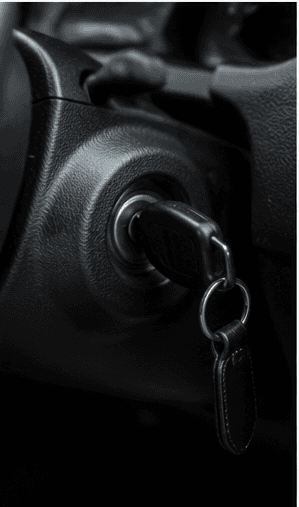
If your car will not start but the lights come on, the battery can still be weak. Dashboard lamps need far less current than the starter motor, so they may illuminate normally while voltage collapses as soon as you turn the key. Other possibilities include poor battery connections, a starter or control-circuit fault, an immobiliser issue, or a fuel, ignition or sensor problem. The most useful clue is what happens when you try to start: a rapid click, one solid click, slow cranking, normal cranking or complete silence each points the investigation in a different direction.
First identify what the car does
Listen and watch the dashboard during one brief start attempt. Rapid clicking often occurs when battery voltage is too low or a connection has high resistance. One heavy click can point towards the starter solenoid, starter motor, cable or an engine that cannot turn, although testing is essential. Slow cranking strongly suggests insufficient battery power, cable resistance or a dragging starter. Normal-speed cranking without firing shifts attention towards fuel delivery, ignition, engine timing, compression or an engine-speed signal.
If nothing happens, check whether the gear selector is fully in Park or Neutral on an automatic, or whether the clutch pedal is fully depressed on a manual. A selector, clutch switch, start button, relay, immobiliser or wiring fault can interrupt the command. Do not repeatedly crank for long periods; that can flatten the battery and overheat the starter.
Why working lights do not rule out the battery
A healthy fully charged battery has to deliver a very high current for starting. Interior lights, a radio or the instrument panel draw only a small fraction of that load. A battery with reduced capacity may operate them yet fall below the voltage needed by the starter and control modules. Cold weather, infrequent short trips, age and an overnight drain can expose the weakness.
Headlamps that dim dramatically during the start attempt support a supply problem, but this is not a definitive test. A proper assessment measures open-circuit voltage, voltage drop under load and battery conductance or capacity. If the battery repeatedly discharges, investigate the reason rather than assuming replacement is the complete answer. Our guides compare a battery fault with an alternator fault and explain overnight battery drain.
Battery terminals, earths and main cables
Loose or corroded terminals can carry enough current for small electrical loads but not the starter. With the ignition off, look for visibly loose clamps, heavy corrosion or a damaged cable. Do not place tools across battery terminals, and do not disconnect the battery casually: modern vehicles may need security codes, window resets or battery registration, and disconnecting it can erase diagnostic evidence.
Voltage-drop testing while the circuit is loaded is more informative than simply looking at a cable. Resistance can hide inside a crimp, earth strap or terminal that appears acceptable. A technician can compare voltage at the battery, starter and engine earth during cranking to find where power is being lost.
When the starter system is involved
The starter motor cannot be condemned from a click alone. The solenoid may receive inadequate voltage because of a weak battery, faulty relay, ignition switch, control module decision or poor connection. The engine may also be mechanically difficult to turn. Diagnosis should establish that the engine rotates freely, battery supply and earth are sound, and the starter command reaches the correct terminal before replacement is proposed.
Push-starting is not suitable for every vehicle and can create safety or catalyst risks. It will not help an automatic, many hybrid systems or a vehicle with certain electrical faults. Follow the manufacturer's guidance rather than treating it as a default solution.
If it cranks normally but will not fire
Normal cranking means the starter is turning the engine, but combustion is not beginning. The engine needs correct fuel delivery, ignition on petrol engines, compression, timing and reliable position signals. A failed crankshaft sensor may prevent spark or injection. Low fuel pressure, contaminated fuel, a flooded engine, immobiliser authorisation or mechanical timing trouble can produce a similar result.
Avoid spraying starting fluid into the intake. It can damage engines and air-measurement components and can create a fire hazard. A diagnostic scan may show whether engine speed is detected during cranking, but further testing is still needed. Fuel-pressure measurement, spark testing using suitable equipment and mechanical checks should be performed safely.
Immobiliser and key clues
Look for a flashing key, padlock or security message. If you have a second recognised key, trying it can help distinguish a key problem from a vehicle-side fault. Keep other keys and electronic tags away from the reader area. A flat key-fob battery does not always prevent emergency starting because many cars have a passive transponder or backup position; consult the handbook.
An immobiliser warning is not proof that the key itself has failed. Low vehicle voltage, antenna faults, lost synchronisation, module communication problems and wiring faults can all block authorisation. Electrical fault finding is often the right route when the start command or module communication is missing.
Safe checks before requesting help
Confirm there is fuel rather than relying entirely on the gauge, especially if the car is parked on a steep slope. Note the exact sound, warning messages and whether the problem appeared after rain, repair work, refuelling or a period unused. Try one controlled start in Neutral as well as Park if the handbook permits. Switch off heaters, lights and chargers before the attempt.
If jump starting is permitted for the vehicle, use the specified connection points and sequence. Incorrect polarity or unsuitable connections can damage electronic modules. Stop if cables become hot, the battery is swollen, frozen, leaking or smells strongly of sulphur. When the cause is unclear, professional battery and charging diagnostics are safer than repeated boosting.
Getting the fault confirmed
SOB Autofix can test starting, battery and charging systems and investigate crank-no-start faults. Useful diagnosis follows the symptom: load-test the supply for slow or clicking starts, verify starter commands for silence, and check engine data, fuel and ignition evidence when it cranks normally. That process helps avoid replacing a battery or starter that was only affected by another fault.
Frequently asked questions
Can the battery be flat if the radio still works?
Yes. The radio needs little current compared with the starter. A weak battery can power accessories but suffer a major voltage drop during a start attempt.
What does rapid clicking usually mean?
It commonly means voltage is collapsing and the starter solenoid is repeatedly engaging and releasing. The battery, terminals and main cables should be tested before a starter is blamed.
Why does the engine crank but not start?
Cranking without firing can involve fuel pressure, ignition, timing, compression, immobiliser authorisation or a missing crankshaft signal. Scan data and targeted tests are needed to separate them.
Should I keep trying the key?
No. Repeated long attempts can discharge the battery, overheat the starter and send unburnt fuel into the exhaust. Record the symptom and arrange diagnosis after a few brief attempts.
Related guides and services
Car still refusing to start?
Tell SOB Autofix whether it clicks, cranks slowly, cranks normally or stays silent so the right starting and diagnostic checks can be planned.
Get a diagnostic quoteKeep reading
Related articles
Car Electrical Problems: 10 Signs You Should Get Your Vehicle Diagnosed